Funny Vampire Movie Fight in a Club
Eternal life has been mortals' quest since, well, for eternity really. The concept of living to see every advancement of human society has splintered into literature and folklore in many different ways. Perhaps the most beloved lore that's been spun out of eternal life has been the vampire. The vampire is probably most appealing because the vampire isn't hugely enviable, so it's not a wish-fulfillment fantasy. To maintain eternal life they must pierce the neck and suck the blood of a living human. They can't go out during the daytime. They can't even go into someone's home without being invited. It's a lonely existence that also keeps the thrill of the hunt and the thrill of keeping a secret.
Because vampires exist in the folklore of almost every society on Earth, it's only natural that it'd be a story expressed in nearly every language and thus, films around the world. There have been some absolutely great vampire movies. There have also been a lot of duds. Each century of filmmaking has experienced more than one peak vampire moment, where the lore needed to be recycled into something fresh and new, before totally sucking. It's appropriate. Just like many of the vampires on this list have to adapt to the times, so do the films themselves.
We could list more than 25 films here, but we narrowed it down to a number low enough that you can tell us how much we suck for leaving off your favorite. It's fun that way, no? As always, let us know if your favorite made the cut, if we hipped you to something new you wanna see, or if you'll never read us again because we're not fans of vampires who sparkle or run in packs of Coreys.
25) Fright Night (1985)
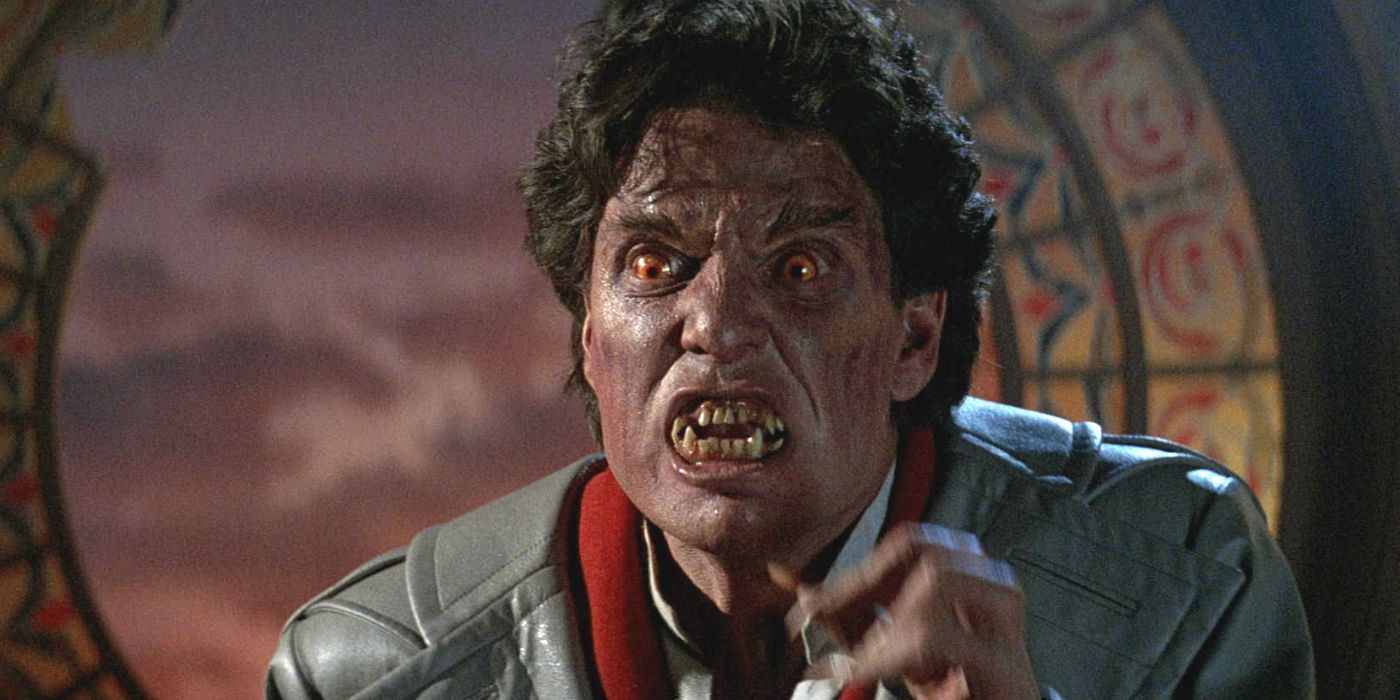
Fright Night is a gleeful connector between the cinema of voyeurism that Brian De Palma had perfected at the beginning of the 80s—with films like Body Double, Blow Out and Dressed to Kill —and the teen comedy that consistently pitted the less popular boys and girls against their accomplished counterparts. Oh and it features a delightfully hammy performance from Roddy McDowall as an actor who kills vampires on TV and is sought by our teens (William Ragsdale, Amanda Bearse, Stephen Geoffreys) to vanquish the suave vampire (Chris Sarandon) who lives next door, taunting them by having a new female (victim) over every night. Tom Holland's film was better as a 2011 remake, but the original is a nice time capsule that used horror as the connection to adolescence and peeping. — Brian Formo
24) Vampires (1998)
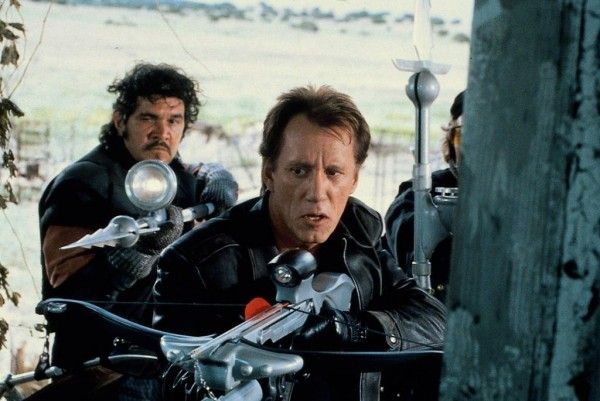
The second best of John Carpenter's interesting but largely dramatically lacking 1990s output, Vampires expresses a kind of hard-nosed brand of bad-assery that other directors have attempted to pull off but few have ever even brushed up against. James Woods is Jack Crow, the leader of a gang of vampire slayers who are all but wiped out completely when they come up against Jan Valek ( The Karate Kid Part 3 's Thomas Ian Griffith), a powerful bloodsucker looking for a talisman that will allow him to walk freely in sunlight. There's no attempt to make Crow into a role model. There's not even a minute trace of sentimentality in the production on the whole really, and it's that simplistic, skeptical perspective that gives Vampires its undeniable edge. The film is shot well, strewn with good use of gore and impactful action sequences, and sports a solid cast that also includes Mark Boone Jr., Sheryl Lee, and Maximilian Schell. All that's great, but it's near-textural feeling of Carpenter's mind at work in every frame that makes Vampires unique in a sub-genre that so often feels plain. – Chris Cabin
23) Byzantium (2012)
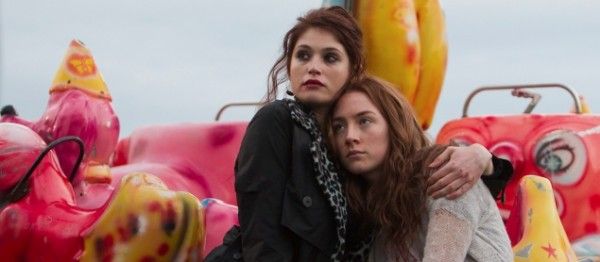
Neil Jordan has double-dipped in the vampire genre, and although his Interview With the Vampire is his most well-known work, we're giving his visually arresting but chillingly distant Byzantium the nod here. Handsome as Interview is, and important for showing the eternal sadness of vampirism, Byzantium bares more of its soul. It's one of the few films that show vampires not as upper-class blood drainers, but as members of a scrappy lower class.
Told from the viewpoint of a forever young vampire (Saoirse Ronan)—who only preys on those already at death's door—she writes about her vampire mother (Gemma Arterton) as half tragic, half inspiring, because she's a woman who's never been able to evolve beyond the world's oldest profession (selling her body), but who also chose to become a vampiric being when that was reserved solely for men. Jordan's film is eerie, feminist, and a bit meandering. What Jordan excels at with Byzantium is elaborately displaying blood—from decapitations, waterfalls, and bandages—with a can't-look-away voyeurism POV. Blood has never looked so enticing—nor has the vampire's desire to feast and bathe in it—than in this film. — Brian Formo
22) Thirst (2009)
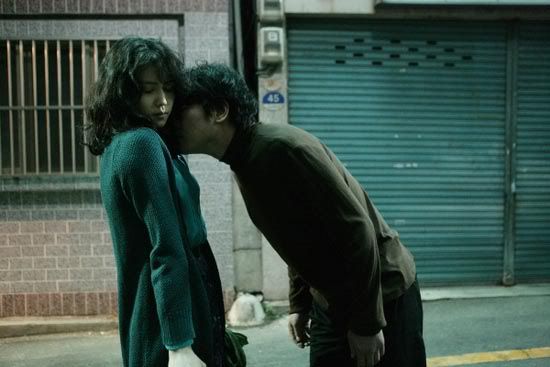
Fans of Park Chan-wook may have been blindsided by Thirst . I certainly was. After creating two of the best South Korean movies ever made in the aughts with Oldboy and Sympathy for Mr. Vengeance , Chan-wook unleashed Lady Vengeance , in which the violence continued to be pummeling yet critical and the turns of the plot remained unpredictable. What changed was the humor, which was far more buoyant, bordering on animated, in Lady Vengeance.
This new tactic has become part of his stylistic habits as a writer and director, and Thirst was the first time where it felt like he was pushing his style into an entirely new realm of thought and perspective. This tale of a sinful priest who turns bloodsucker and begins a rapturous, intensely physical relationship with the woman he feasts on is tonally audacious as well as formally rigorous. Chan-wook's unpredictable editing has rarely been so subversive in its discombobulating effect on the linear narrative but he's more patient than one might realize. When the woman becomes more confident in her state than the man, Thirst becomes genuinely unsettling and frightening in its mapping of their sexual relationship. The result of all of this is at once a cracking satire of gender roles and sexism as well as a ravishing, blood-soaked vampire story for the ages. – Chris Cabin
21) What We Do in the Shadows (2014)
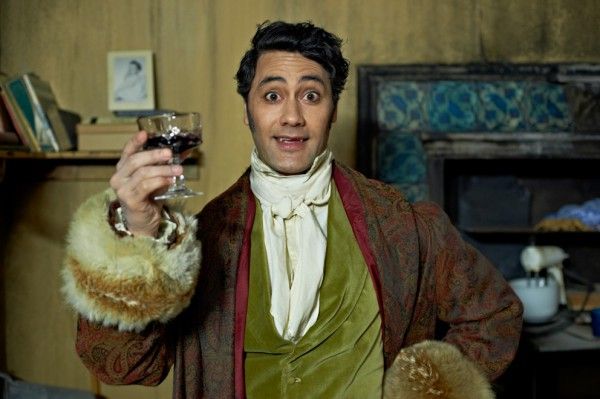
Finally, someone breathes new life into the vampire genre! What We Do in the Shadows is a mockumentary about four vampire flatmates and it takes an absolutely delightful approach to exploring creature clichés in a deadpan, reality show-like manner. Viago (Taika Waititi), Vlad (Jemaine Clement), Deacon (Jonathan Brugh) and Petyr (Ben Fransham) all turned during different time periods, which leads to some brilliant spins on familiar issues like doing the dishes, getting into nightclubs, adapting to new technology and so much more. The only unfortunate thing about What We Do in the Shadows is that it clocks in at a mere 86 minutes. Between the winning jokes and the wildly charming friendships between the characters, I'd happily watch a whole series about their antics. — Perri Nemiroff
20) Fright Night (2011)
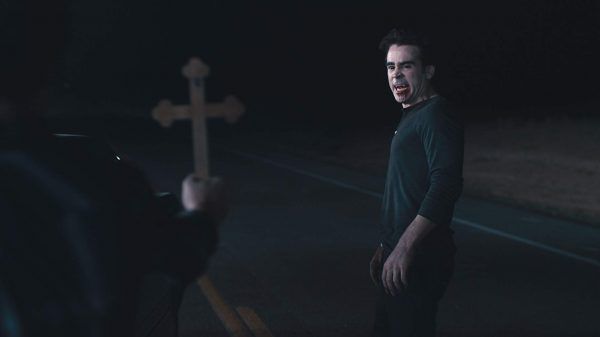
It's (really not all that) Controversial Opinion Time! Though there's plenty of charm and humor to the original Fright Night , the movie, on the whole, is not the most enthralling vampire flick. It looks like a sitcom, the acting is strictly competent, and if there are scary scenes, I've missed them three times now, after a variety of people insisted I give it a second shot. You can't win them all.
It's all the more reason to sing the praises of Craig Gillespie's remake of the film, starring the late Anton Yelchin (it's still not easy to type that) as the young man who begins suspecting that his neighbor is a vampire. Chris Sarandon's vampire was the best part of the original film and Colin Farrell's aggressive, playful performance as the vampire who wants a taste of Yelchin's character's mom (Toni Collette) nearly steals this entire movie away as well, but Gillespie is too restless an artist to let that happen. He evinces a dark sheen that never tips over to grimness, working with a lot of magic-hour lighting and night scenes, in which aesthetic beauty mixes with elusive acts of horror. The filmmaker is also smart to give the movie some comedic relief via David Tennant's magic man, and Farrell rightly makes his vampire's seduction skills the most prominent power in his arsenal. In this version of Fright Night, he's the rupturing vision of what the planned community where the film is set tries to cover up, namely a good, healthy thrill that could take your life under the right circumstances or, more accurately, if he skips a feeding one day. – Chris Cabin
19) Ganja & Hess (1973)
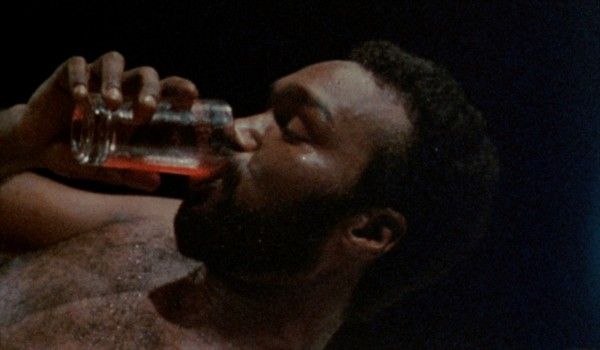
Nothing on this list is even half as formally audacious and politically furious as Bill Gunn's racially woke vampire tale, set in the world of affluent black Americans in the 1970s. The movie, which takes place largely in the palace-like abode of Ganja (Marlene Clark), a wealthy widow, has the feeling of falling under a spell, and that's how the film conveys the allure and feeling of transformation that vampires go through. Her relationship with Hess (Night of the Living Dead's Duane Jones), a vampiric anthropologist who has a remarkable hold on his powers, is short-lived but mesmerizing in its distinct view of race and history. Here, Hess is turned by a Myrthian dagger, by Ganja's husband (Gunn himself), which came from an ancient tribe of African bloodsuckers. The suggestion is that, for all his intellectual knowledge of the history of his people, he hasn't fully felt the anger of what's happened to Africans over the years, until the dagger hits him.
Gunn explores the transformation and way of being in ways that touch on painful, complex history and societal issues that are hard to move off the table. It might take a while for the full effect of the film's thoughtful thematic underbelly and attentiveness to behavior to register, but they inarguably add to the seductive, unyielding pull of the film. Decades later, there's no movie that looks even remotely like this and the number of oddities at its artistic caliber is minuscule. – Chris Cabin
BONUS MENTION: Da Sweet Blood of Jesus , Spike Lee's remake of Ganja & Hess, was on the bubble of the top 25 and deserves a mention here; Lee's remake reflects his feelings as a wealthy older black American, but also goes as far as to tie his own obsession with style and his own artistry with his monstrous emotional side. The movie is dry to be sure, but it's a fascinatingly skeletal melodrama, powered by an anxious fury, a rueful genius, and palpable self-excoriation.
18) Dracula: Pages From a Virgin's Diary (2002)
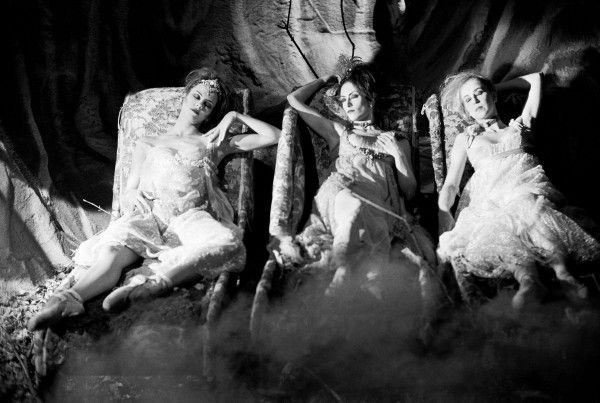
Guy Maddin's inexplicable, ingenious, and silent retelling of the Dracula myth deserves a special place in the realm of vampire films. The movie begins with Lucy (Tara Birtwhistle), a gorgeous young woman with suitors to spare, wondering why she can't just take on three husbands, suggesting a rerouting of the sexual dynamics of the original. Then, Dracula (Zhang Qiang-wei), takes a bite out of her within the first ten minutes, whereas the original tale has this occurring much later, and that's not even the half of what Maddin does here.
Maddin incorporates colored lenses, outdated effects, modern dance and ballet, intertitles in action scenes, and sensationally physical performances in this enigmatic and wildly inventive whatsit, and his seemingly impulsive formal decisions come to reflect the strange urges, sudden changes of heart, and unending hunger for pleasure that underline the tale of the cordial beast who requires blood for sustenance. In effect, Maddin turns a story of terror, loss, and dismay into an experiential blast of madness, lust, comedy, and unbound invention. – Chris Cabin
17) Vampire's Kiss (1988)
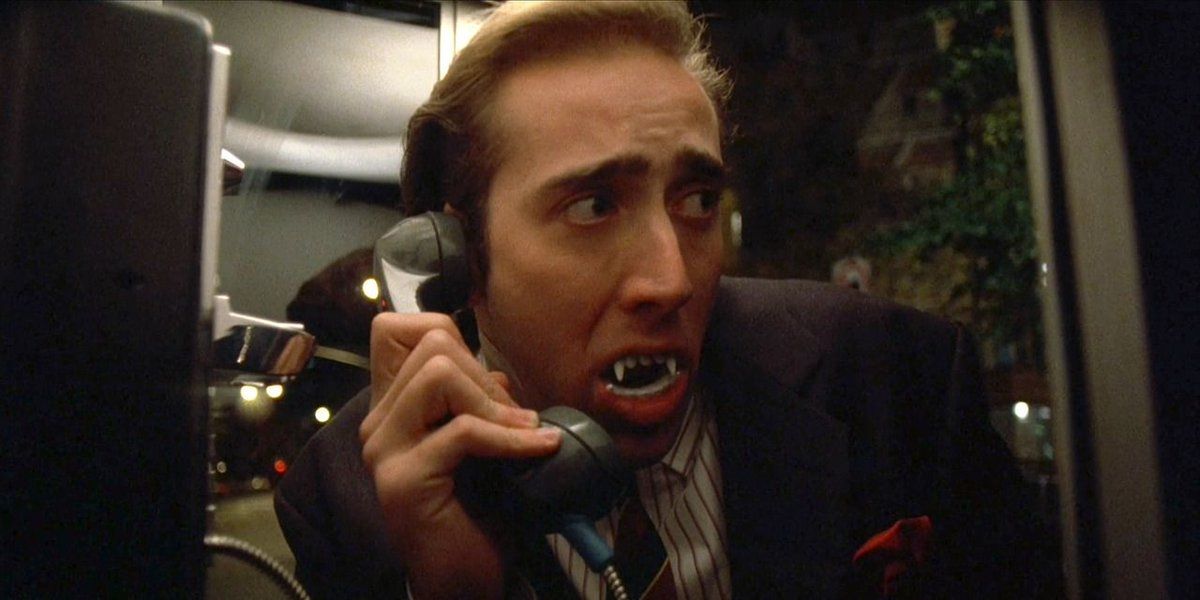
The cult that sprung up around Nicolas Cage in the wake of him going more the way of B-movies isn't surprising and shouldn't be laughed away. Cage's energy, when summoned in the right direction, is a thing to behold and anyone who has seen David Lynch's Wild at Heart will attest to that fact. There are plenty of other performances that showcase that magnetic allure in intensity, and one of the top ones would have to be this late 1980s whatsit. After a strange encounter, Cage's financial pinhead begins believing he's turning into a vampire and his belief in the tenants of vampire lore takes him into dark corners of his psyche. Cage, bless him, goes all in on the deranged character and his intensity powers this wicked and wickedly funny satire of 1980s financial mentality. Any other actor arrives in this role, and it's a clever but innocuous curiosity that gets whispered about at conventions. With Cage flailing around and fully conveying the unhinged side of belief, Vampire's Kiss deserves a reputation as much a great cult movie as it is simply a great movie. – Chris Cabin
16) Daughters of Darkness (1971)
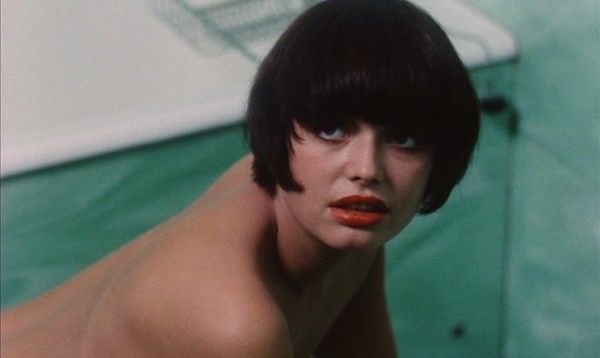
With nudity and sexual proclivity loosened across the first world's film boards, the vampire film finally got to embrace the eroticism of the genre in the 70s. For the past few decades there have been many sex films involving the vampire; Belgium's Daughters of Darkness is the most artful and moody of the spicy lot. There's a flower-eating "mother", a mysterious man on a bicycle and an ornate Transylvanian hotel where a Countess (Delphine Seyrig) and her assistant (Andrea Rau) lament that their world hardly has any remaining virgins, and thus the Countess' ritual of bathing in the blood of 800 virgins for her healthy sheen, is beginning to wane.
Enter a newlywed couple who've already fallen out of love with each other (she is Swedish, and thus not of "good blood", hardly a concern of a vampire) and are thirsty to explore each other lovers, and you've got a hotel fit for psycho-sexual exploration and feastings. Harry Kümel's film is grindhouse fare for those who prefer a touch of class. And Seyrig, a veteran of international arthouse films for Alain Resnais and Chantal Ackerman, provides one of the classiest femme vampires, while Rau is one of the most alluring—particularly when her silky seduction movements perfectly compliment the serenely surprising trap-door score. — Brian Formo
15) Nadja (1994)
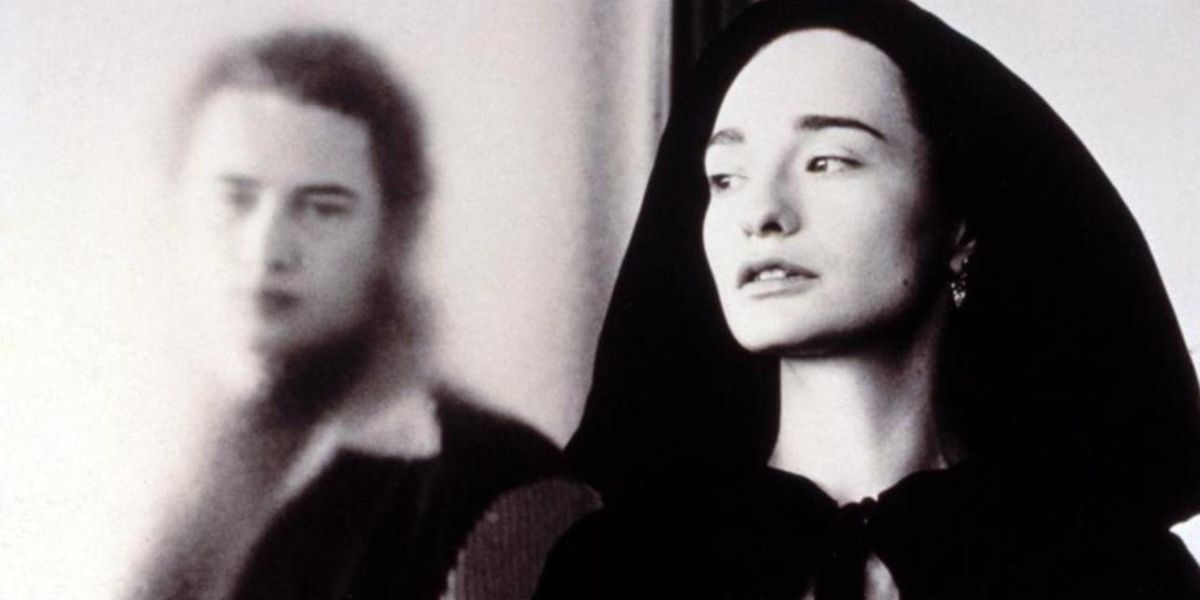
Michael Almereyda's transfixing early work is often lost in the tide of 1990s American independent phenoms. Nadja spins the myth of both Dracula and Van Helsing, the latter being represented by a befuddled Martin Donovan and a rambling Peter Fonda. Almereyda's use of black-and-white is sumptuous, and it lends the royal familial power plays of Dracula's family, played by Elina Lowensohn as Nadja and Jared Harris as her complicated, long-estranged brother, a severe gravity. Almereyda likes playing with the historical knowledge and experience accumulated by such creatures, as well as the psychological traumas they can adopt from their bestial ways, but that doesn't make Nadja any less menacing. Almereyda's movie haunts in ways that so many other movies on such subjects merely thrill, and rarely in memorable ways, mind you. — Chris Cabin
14) Blade (1998)
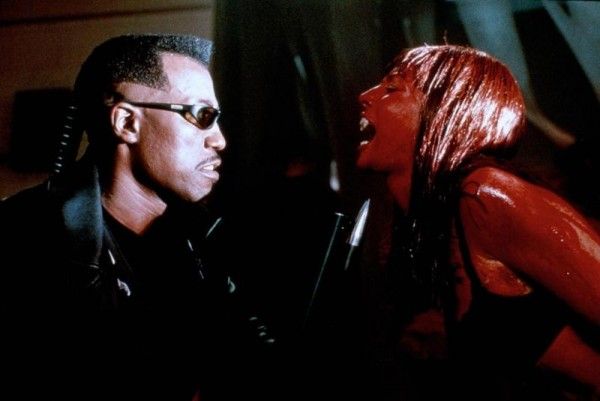
Blade certainly isn't the best vampire movie to come out of the 90s, but it is one of the most kick ass. An action-packed comic book adaptation ahead of its time, Blade recruits genre icon Wesley Snipes as the titular hybrid mercenary on a mission to rid the world of an evil vampire scourge. From a screenplay by David S. Goyer, who would later help establish "gritty and grounded" as the order of business for the DC universe with The Dark Knight Trilogy and Man of Steel, Blade integrates vampire culture believably into the underworld of contemporary society with a goth raver bent that makes them seem like a bunch of blood-thirsty tools. Basically, you really just can't wait for Blade to kick the shit out of them all.
And Snipes does so with aplomb in a tremendously athletic performance, as he slices, shoots and stakes his way through his immortal foes with impeccable physical command. He's backed by the weaponry of his vampire-slaying ally Whistler, played by a delightfully gruff and grumbly Kris Kristofferson, and the two have a no-nonsense, taking-care-of-business friendship that helps keeps the movie entertaining even when no fists are flying and the dialogue becomes laughable. Cheesy lines and all, Snipes carries the movie on his very muscular back with a self-seriousness that works for the character. – Haleigh Foutch
13) From Dusk Till Dawn (1996)
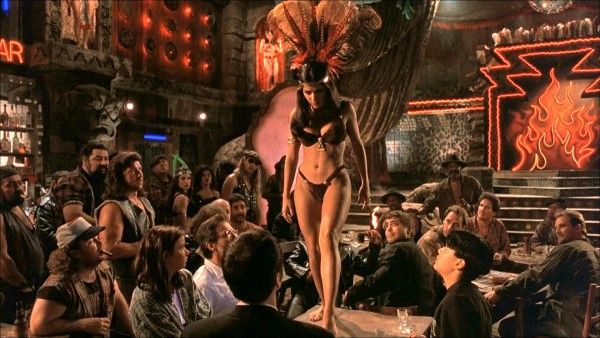
From Dusk Till Dawn is the two-films-in-one low-fi experience that Grindhouse was supposed to be. The first half follows some natural born killers (George Clooney and Quentin Tarantino) as they rob banks and convenience stores in a crime spree that's headed for south of the border. They kidnap a man of faith (Harvey Keitel) and his daughter (Juliette Lewis) and force a stop at the Titty Twister to celebrate their cross into Mexico. A fight breaks out for the club's siren (Salma Hayek) and then the second genre flick kicks in because the Twister is a coven for vampires and anyone who lives is going to have to fight until dawn.
Robert Rodriguez's film is equally fascinated by the depravity of the night demons as he is with the sadistic brothers. The Christ-Loving Keitel is there to provide some guilt for enjoying this so much. — Brian Formo
12) Martin (1977)
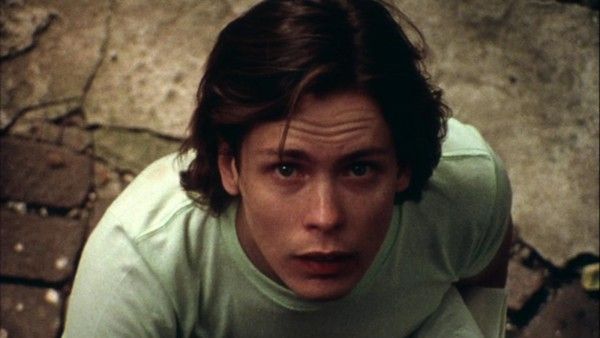
It's always the off-brand George A. Romero (Night of the Living Dead) movies that get ignored when talk of the master's legacy comes up. Martin is a far more inventive and unnerving treatment, and loving upending, of horror mythos. Here, it's the psychological belief in the titular teenager's vampirism that is central to the action. He uses syringes to get his blood and he's a master seducer like I'm the King of Peru. And Romero's fascination with the tale of the bloodsuckers seems to come from a near-clinical place, until you get toward the end of this twisted, menacing whatsit. The feeling is not so much fear here as it is psychological discomfort and decades after this unique masterwork saw release, there's still nothing quite like it, even amongst clear imitators and pretenders to the throne. Martin remains a distinct work in a genre that prizes imagination over almost everything else. – Chris Cabin
11) Blood for Dracula (1974)
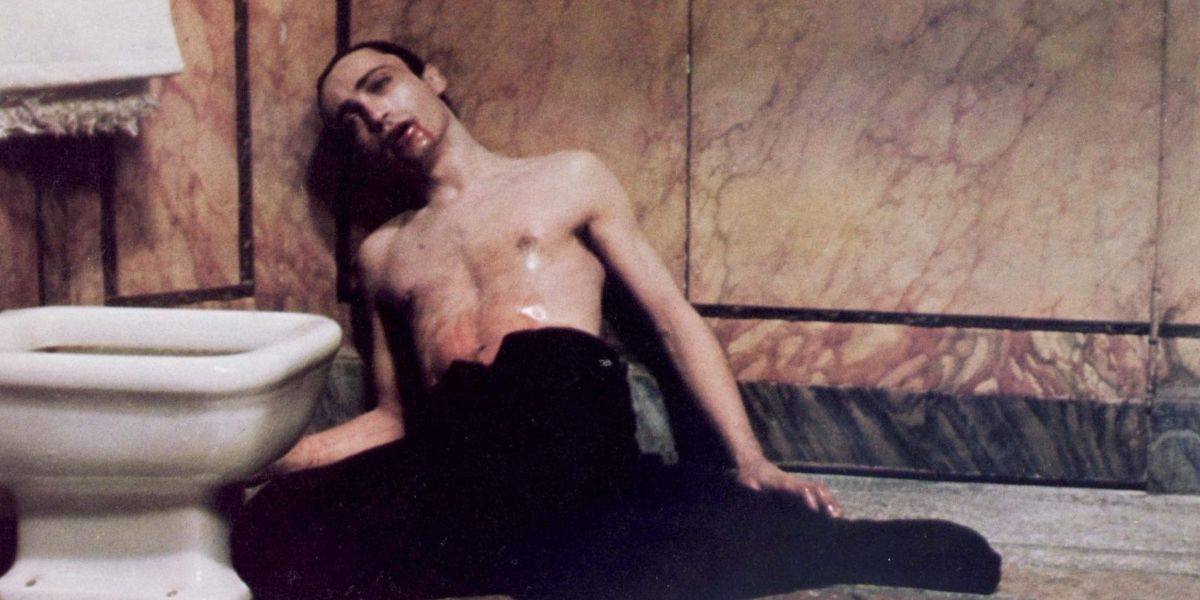
Count Dracula was always a bit of a seducer, but Paul Morrissey (and producer Andy Warhol) gave us a hilariously impotent Dracula (Udo Kier) in Blood for Dracula . This Dracula's body is growing incredibly weak because—after centuries of feeding on virgin necks—it's become harder and harder to find virgin women to drink from. His assistant suggests they go to Italy where families still have staunch Catholic values and thus the women will be pure. Warhol's sex god Joe Dallesandro (always the candy, never the actor; he brandishes a thick Brooklyn accent here) has taken it upon himself to take the virginity of every woman in the Italian countryside to starve Dracula out. Blood for Dracula gives a different meaning to a wooden stake piercing the heart of Dracula. Here, morning wood is literally killing the Count.
While it's easy to laugh at an impotent seducer, there's a certain sadness in Kier's performance; with increased sexual freedoms we lose classical society and Kier's Dracula is a physical representation of that slow death. This is a man who could live forever as long as he lived in an era of purity. For centuries, Dracula was a sorcerer of sexuality and men had to hunt him down and physically impale him to protect their pure women. Now any man with six-pack abs can thrust his way through town and weaken his powers. — Brian Formo
10) Shadow of the Vampire (2000)
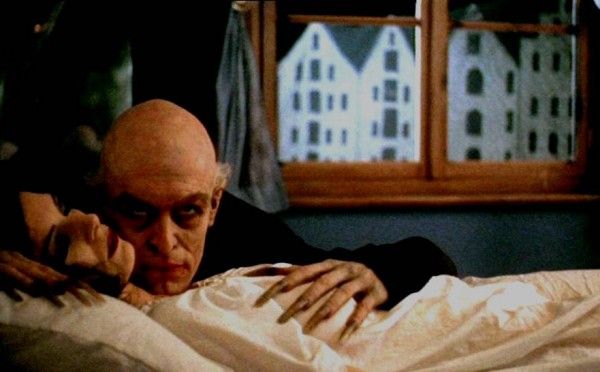
Because no cinephile can label themselves such without seeing F.W. Murnau's Nosferatu , they should also relish Shadow of the Vampire . Murnau's lead vampire in that 1922 film was so convincingly played by Max Schreck (in his only film credit) that director E. Elias Merhige deliciously postulates that Schreck was indeed a vampire hired by Murnau and promised a human sacrifice in return for his authentic film. John Malkovich plays Murnau, but it's Willem Dafoe who's being Max Schreck and it's perhaps the best performance in a career of many ghoulish turns. This is more dark comedy than outright horror, but the recreation of Nosferatu is classic; and Schreck ruining a take because he grabs a bat out of midair to bite into it is a lovely dig at the filmmaking ego and how far someone is willing to go to get that authenticity. — Brian Formo
9) Bram Stoker's Dracula (1992)
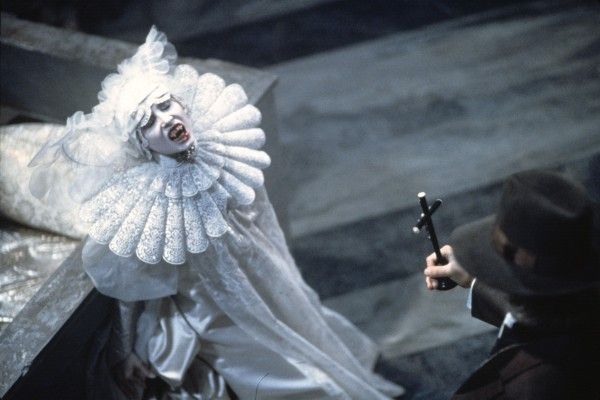
It's really too bad that Francis Ford Coppola has to be judged astride the Godfather trilogy. The first two Godfather films, to say nothing of The Conversation and Apocalypse Now , set an impossible standard to live up to in the annals of popular cinema, and when Coppola wanted to get weird, the reaction was either indifferent or straight-up rancorous, despite the director's tremendous skill and evocative artistry still being evident in nearly every frame.
His take on the Dracula lore, specifically, was dismissed as nothing more than a camp item at best, with lead actors Gary Oldman, Winona Ryder, and Keanu Reeves receiving some critical bruises along the way. Revisiting the film, however, what remains so palpable is Coppola's visual expression of immortality and insatiable lust that goes beyond mere sex, entering into a surreal realm of physical hunger. There's a cutting sense of menace to the entire production and rather than play the classic tale as soberly frightening, the director goes for the psychological madness, disbelief, and uncertainty of becoming a creature that is sustained on blood alone. Tom Waits makes for a great Renfield, but the film belongs to Oldman, who plays each version of the Dracula character with a lurid uninhibitedness, making his very presence summon feelings of liberation and damnation in equal measures. — Chris Cabin
8) Blade II (2002)
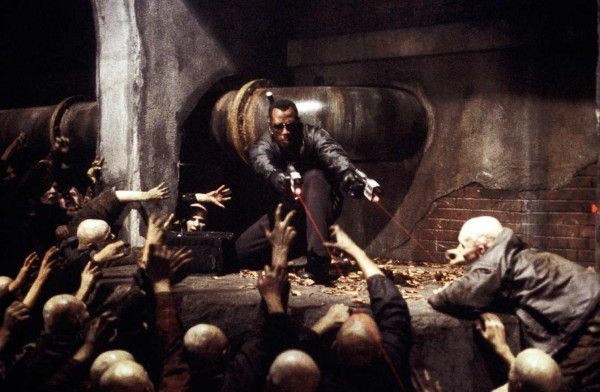
For a moment, the Blade franchise looked to have the same galvanizing appetite for auteur talent as Mission Impossible , and with Blade II , Guillermo Del Toro created a better film (pound for pound) than the original and was able to branch out the story in a way that gave him cart blanche to craft creatures and wild characters. The first movie was a great introductory chapter into the life of Wesley Snipes' day-walking assassin. Del Toro turned the next chapter into facing one's roots as a beast as much as a hero. Del Toro brought in a layer of thematic fascination with physicality, monster politics, and the dangerous ideas that spawn from purity. More than that though, Blade II is a brilliant spectacle, lined with fantastic, ingeniously paced set-pieces of choreographed action and explorative asides with Del Toro's creatures.
As always with Del Toro, his populism has never seemed to disrupt his artistry. As such, Blade II is as remarkable for how fun it is while still packing in plenty of creative oomph. — Chris Cabin
7) The Addiction (1995)
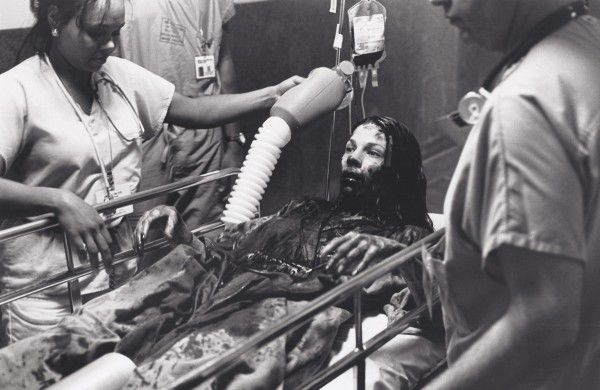
Lili Taylor stars as a philosophy student who's hungry for knowledge before she gets bit by a vampire in a New York alleyway and then gets "the hunger" for blood. It's become pretty chic to investigate the negative aspects of eternal life in recent times, but Abel Ferrara's sparse, black and white film definitely grapples with the most issues, using a vampiric newbie to explore religion, drug dependency, rape and the AIDs epidemic. Luckily Taylor encounters a silky-tongued Christopher Walken—as a nightwalking spiritual guide—who gives her a lesson on how to adapt to her new affliction. The Addiction is extremely academic, but though it waxes philosophical, it's got a specific digestible rhythm that wouldn't turn off the non-Jean-Paul Sartre inclined.
At the center of The Addiction is the idea of how we always change our philosophy of life to better serve our current circumstances—whether it's addiction, a reaction to trauma, the economic discrepancies in a cosmopolitan city, or sudden and unexpected vampirism. — Brian Formo
6) Only Lovers Left Alive (2014)
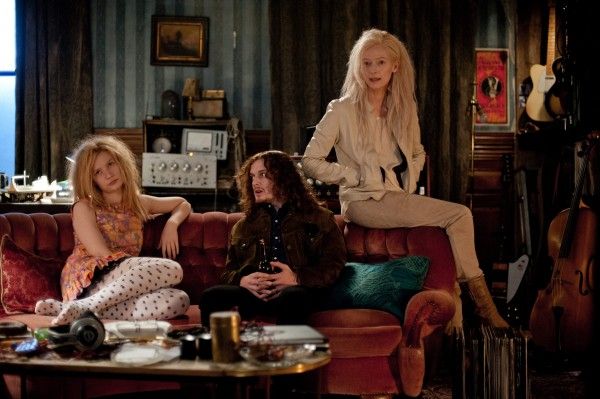
Jim Jarmusch's Only Lovers Left Alive would be a great double feature with the film that preceded it on this list. In The Addiction we meet Lili Taylor at a very strange time at the start of her new life and she's not yet developed a system to fill her stomach with the same composure that she fills her mind. In Jarmusch's philosophical take, we meet Tom Hiddleston and Tilda Swinton after centuries of patterns of bohemian living, being present for the coolest of artistic movements and bored at the state of modern artistry. He is despondent and she attempts to bring him back to life and stop looking at the dark side of things. Their conversations have a warm flow of ideas and people they've mingled with for centuries and how the world can still be mysterious and new despite their constant presence.
Of all the vampire movies on this list, Only Lovers Left Alive is probably the most human. It wants the living audience to continue to be inspired, to seek love, to seek ideas, and to explore new terrain. If not for yourself, do it for the vampires, who need new surprises to rekindle their desire to continue to observe humankind. — Brian Formo
Source: https://collider.com/best-vampire-movies/
0 Response to "Funny Vampire Movie Fight in a Club"
Post a Comment